Mark Pincus Interview: Zynga Founder Lessons on Entrepreneurship, Silicon Valley Leadership, and What Building a Company Really Means
By Marlon Schwarcz · 2026-06-24
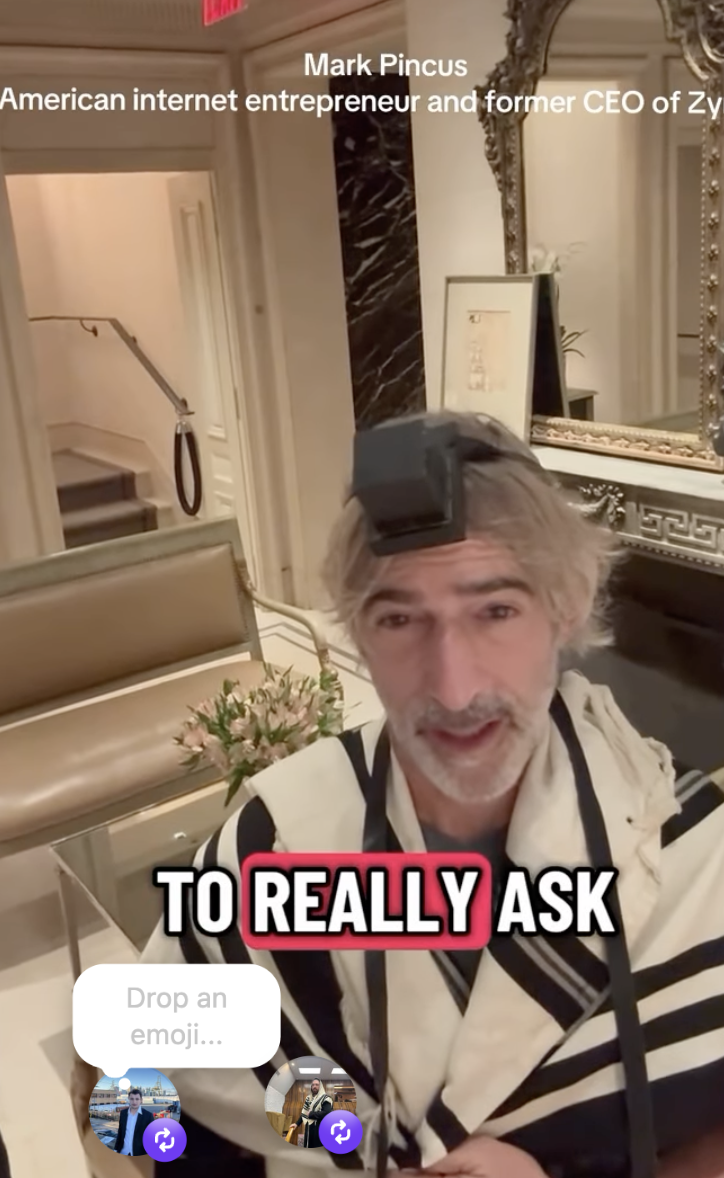
I caught Mark Pincus mid-davening, and I did not expect the moment to stay with me the way it did. It was early in the morning, quiet in a way that felt completely disconnected from the world most people associate with Silicon Valley founders. There was no boardroom, no investors, no noise of decision-making or scale, just stillness. He was standing there wrapped in a tallit with tefillin on, fully absorbed in prayer. It did not match the mental image most people have of a Zynga founder, Silicon Valley entrepreneur, or someone who has spent decades building companies at massive scale. I almost walked past him. But I stopped, and I asked him two questions. He answered immediately, without hesitation, without framing anything for effect, without any layer of performance or positioning. Just truth. And before sharing what he said, it matters to understand who he is, because Mark Pincus is not just another founder in the tech ecosystem. He is one of the defining entrepreneurs of the modern internet era.
Mark Pincus is best known as the founder of Zynga, the company behind FarmVille, CityVille, Words With Friends, and Zynga Poker, products that helped define the era of social gaming and mobile-first consumer internet behavior. Zynga scaled to over a billion users and became one of the most recognizable consumer internet companies of its time, eventually going public and later being acquired by Take-Two Interactive for 12.7 billion dollars, one of the largest gaming acquisitions in history. But the Zynga founder story is only one chapter in a much larger arc. Before Zynga, Mark Pincus was already deeply embedded in the earliest layers of Silicon Valley and internet infrastructure. He was an early investor in Facebook, Twitter, Snapchat, Friendster, and Napster, positioning himself inside multiple generational shifts before they fully formed. He founded FreeLoader, which was quickly acquired, and later built Support.com, which went public. He also created Tribe.net, one of the earliest social networking platforms, built before social media was even a defined category. Across every cycle of technology, he was not observing from the outside. He was building inside it, iterating, failing, and rebuilding again. After Zynga, he did not step away from the system. He moved deeper into it. He co-founded Reinvent Capital, backing companies such as SpaceX, Joby Aviation, and Aurora. He runs WorkPlay Ventures, focused on artificial intelligence, gaming, and next-generation consumer platforms. More recently, he co-founded Playful.AI, focused on AI-driven game creation, and Hivemind, an enterprise AI company built around a core insight that the hardest problem in artificial intelligence is not generation, but handling edge cases that require human judgment. Hivemind builds systems that continuously learn from human input inside organizations in real time. Across decades of Silicon Valley evolution, one pattern stays consistent in his work: he builds early, scales f