Jerusalem is already a global ecosystem — just not coordinated as one Founders operate across Jerusalem, New York, London, and beyond, but the system is still informal and fragmented rather than intentionally structured.
By Leon · 2026-05-29
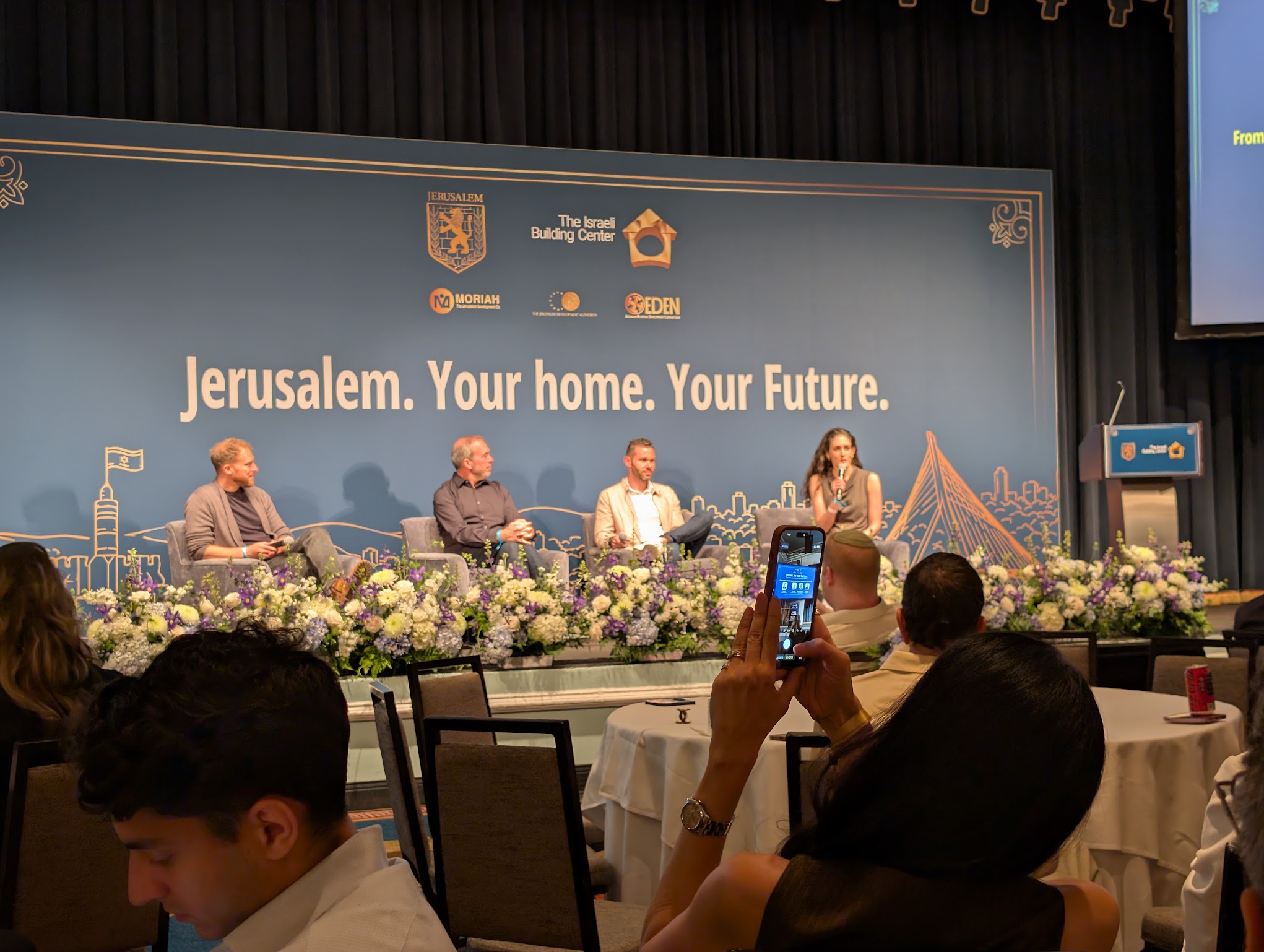
Jerusalem is not missing talent. It is missing a strategy for how its talent already behaves.
This week in New York, I attended one of the most important conversations I’ve heard about the future of Jerusalem’s tech ecosystem — not as a local startup scene, but as a global, distributed network already in motion.
The panel brought together Jerusalem-rooted founders and investors now building at global scale: Yaron Galai, Yumo , Yishai Lehavi (Tulu), Jonathan Machado M² Equity Partners ers), and moderator Yael Gertel Cyera
But the real story was not the companies they built. It was what they represent: a generation of Jerusalem founders who left the city, but never left the system. That is the shift Jerusalem has not fully internalized yet.
Jerusalem is already global — just not structured like it
Yael Gertel opened with a framing that quietly defined the entire conversation: you don’t really leave Jerusalem. You extend it.
A third-generation Jerusalemite, she grew up in the city, studied at Hebrew University, and later moved to New York to help scale Cyera globally.
That idea reframes everything.
Jerusalem already operates across geographies Jerusalem, New York, London, and beyond but without coordination.
The system exists. What is missing is structure.
Jerusalem talent is already global. The network already exists through people, not institutions. Founders naturally operate across borders from day one. What is missing is coordination, shared strategy, and institutional alignment.
Yishai Lehavi founders shaped by disruption
Before founding Tulu, Yishai Lehavi worked in Jerusalem in urban preservation and city development, deeply tied to the city’s identity and physical landscape.
That chapter ended when policy shifted.
What followed was not a transition, but reinvention.
He moved to New York and eventually founded Tulu.
Jerusalem does not produce linear founder journeys. It produces founders shaped by disruption, complexity, and systems that do not resolve cleanly.
That creates a different advantage: adaptability. And adaptability is one of the most valuable traits in global markets.
Yaron Galai Jerusalem as an operating system
Yaron Galai represents one of the strongest Jerusalem-connected founder arcs in Israeli tech.
From Jerusalem roots, he co-founded WeGo (acquired by AOL), then founded Outbrain, a NASDAQ-listed company that became one of Israel’s defining global successes.
Today he is building Yumo.
But the real thread is not companies — it is continuity.
Jerusalem is not a phase in a founder’s journey. It is an operating system that remains active across everything that follows.
It shapes how founders think, build, and scale. Even when they are far from the city, it continues to influence their decisions and worldview.
The diaspora is not external to the ecosystem. It is the ecosystem operating globally.
Jonathan Machado ecosystems fail when they imitate
Jonathan Machado brought a clear investor l